 Scrutora
Policies and training
Write the rules once, get them approved, and know who has read them.
The DPDP Act expects a published notice, a way to handle rights and complaints, a breach plan and staff who know what to do. Scrutora starts you with twelve documents written for the Act, filled in from what you already keep, takes each through approval and publication, and asks your staff to read it.
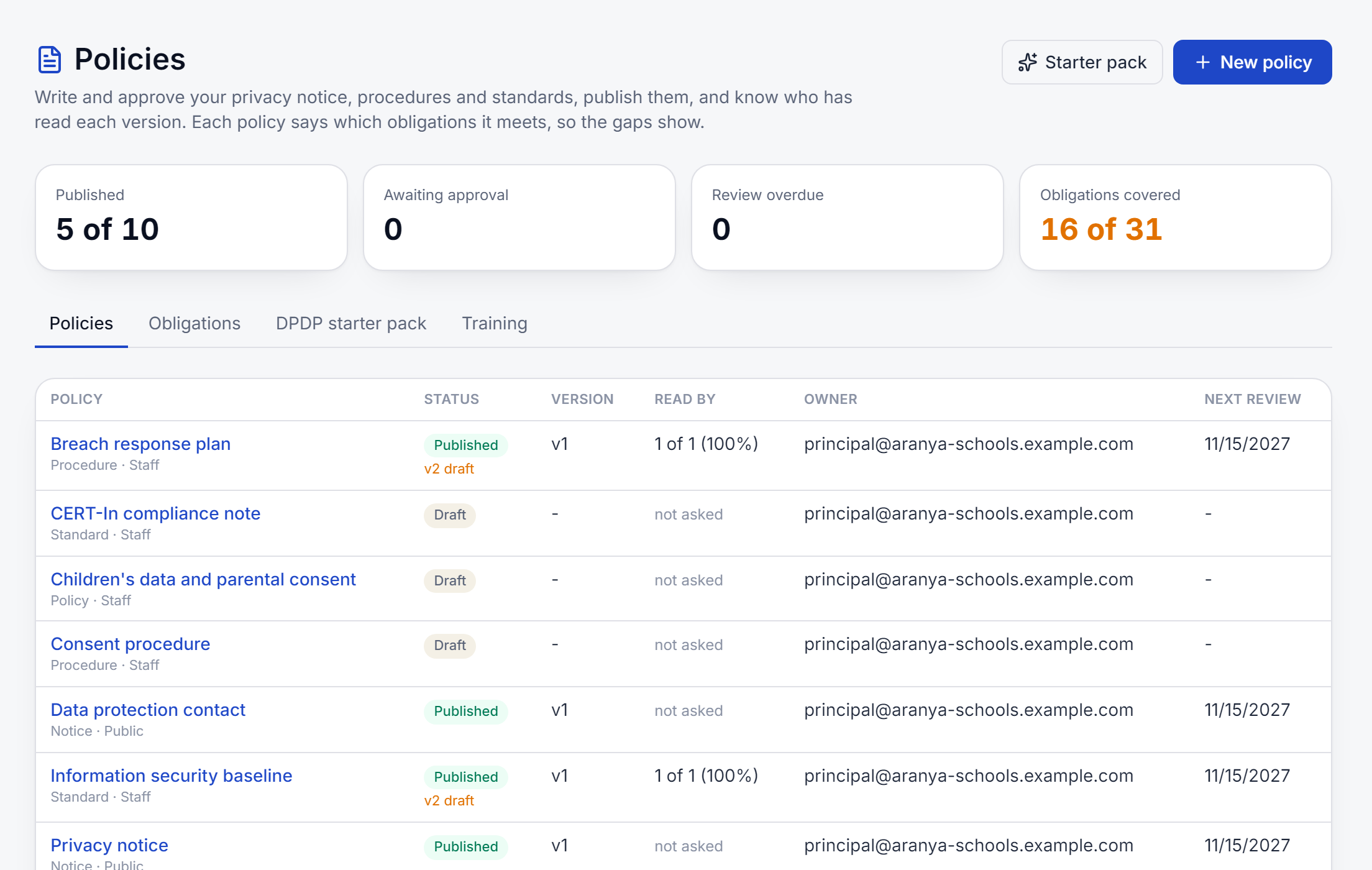
The DPDP starter pack
A privacy notice, the consent procedure, children's data and parental consent, rights and grievances, retention and erasure, an information security baseline, the breach response plan, your data protection contact, processor management, transfers outside India, a Significant Data Fiduciary programme and a CERT-In compliance note. Each starts as a draft with your organisation's name, contacts, vendors and retention periods already in it.
Approval and coverage
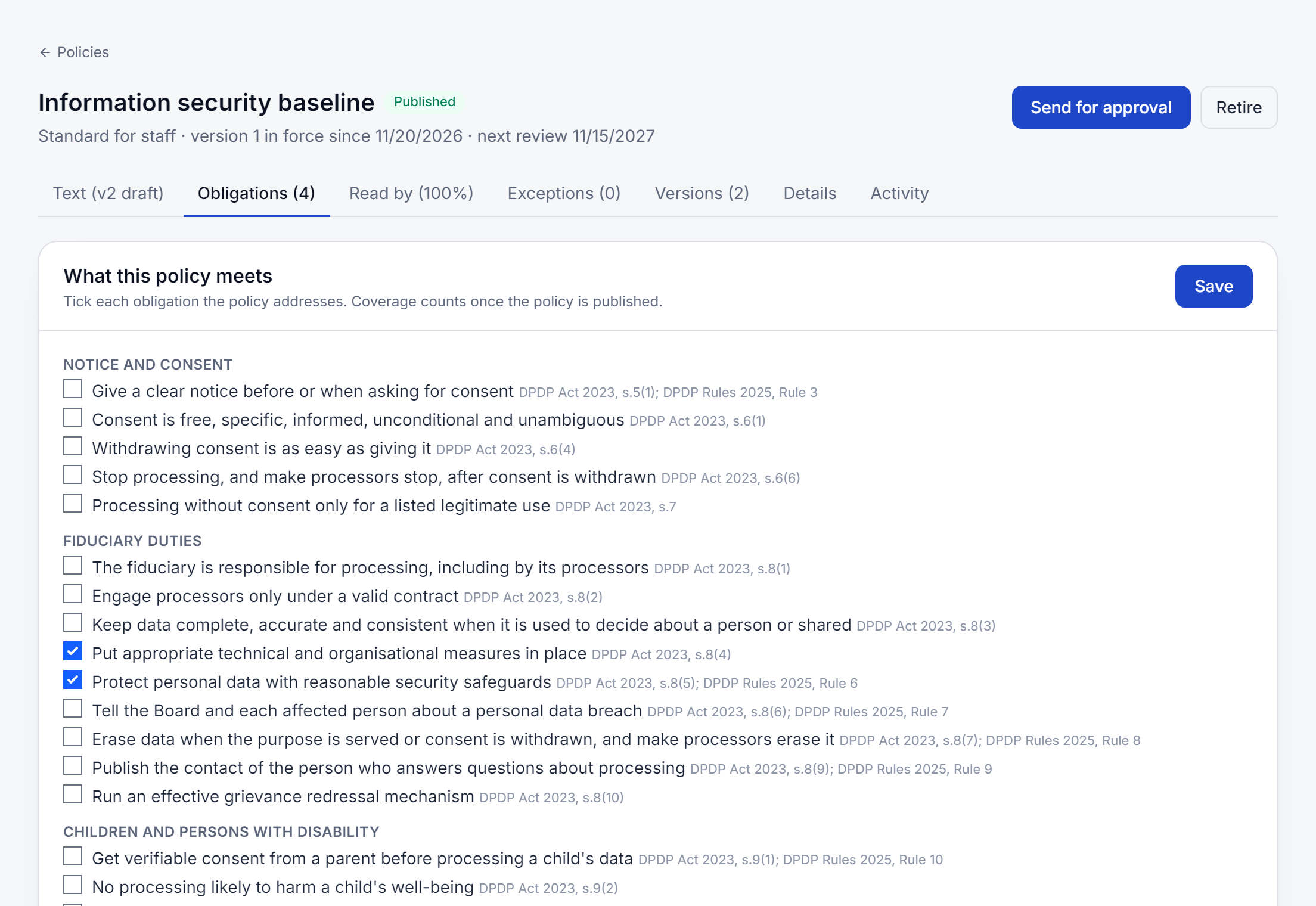
Every policy says which duty it meets, so the gaps show.
A policy goes from draft to review to approved to published, with a named owner and approver. Once approved, the text is fixed; a change starts a new version and you can compare the two line by line. The thirty-one obligations from the Act, the Rules and the CERT-In Directions each show whether a published policy covers them.
- A review date for every policy, with a reminder when it comes due
- Exceptions with a reason, an approver and an expiry date
- Public policies get a page of their own that always shows the version in force
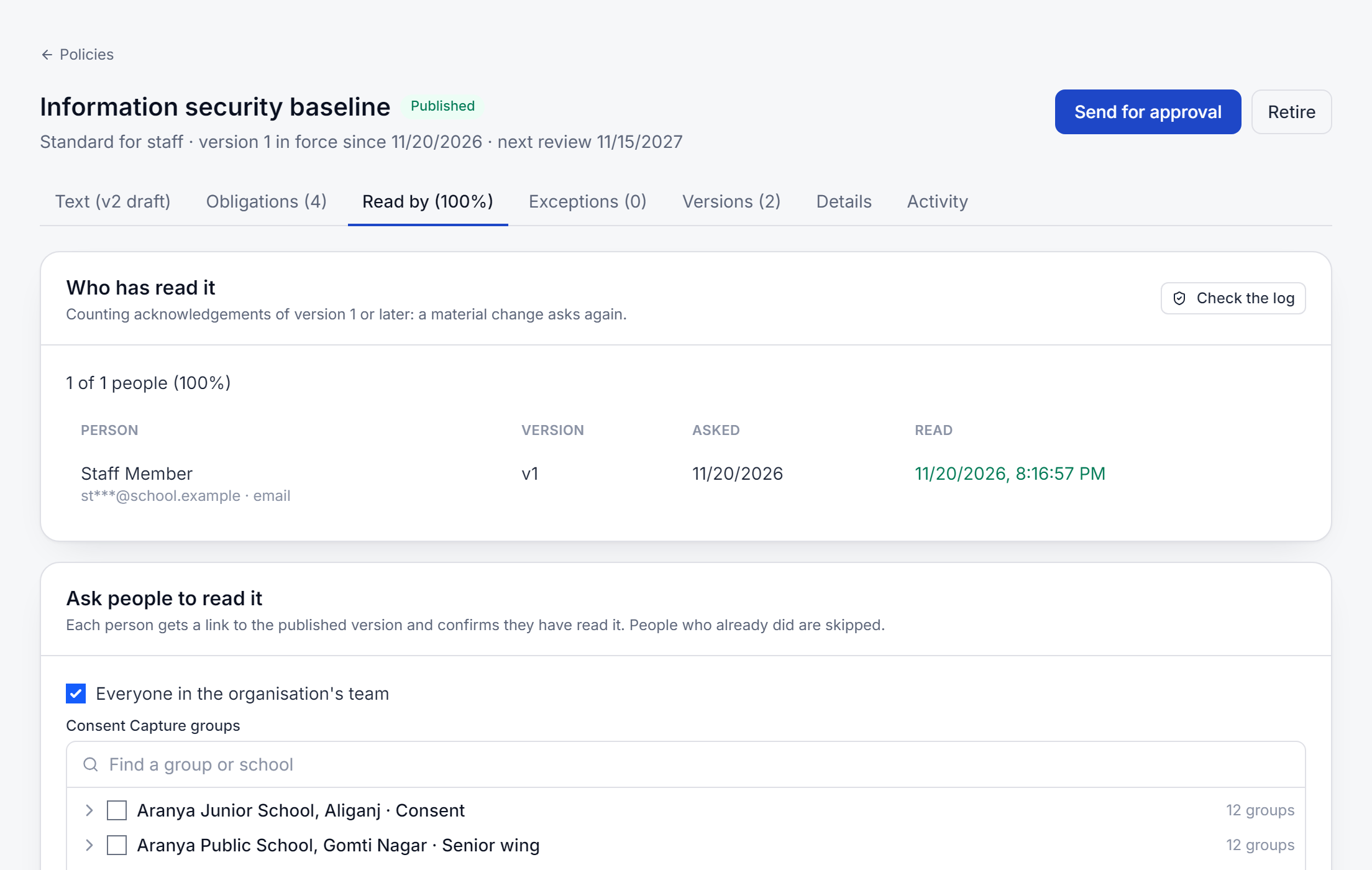
Acknowledgements
Send a policy to your staff and see who has read it.
Send a published policy to your team, to groups of staff you already keep in Consent Capture, or to a list of emails. Each person reads it from a link and confirms; the confirmations sit on a sealed log you can verify. A small edit does not ask again; a material change does.
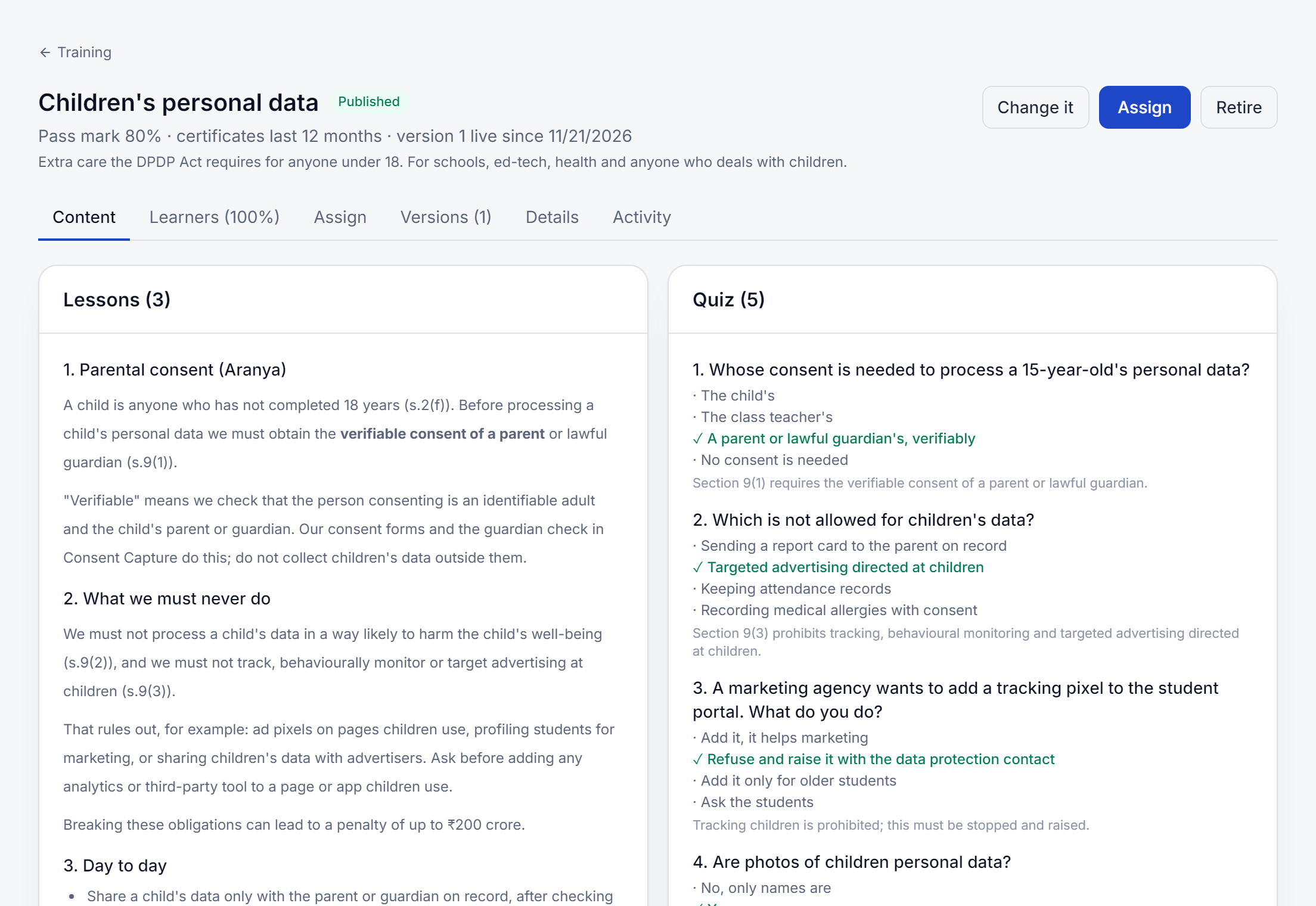
Training
Short courses with a certificate anyone can check.
Four courses written by Scrutora for staff of Indian organisations: data protection essentials, handling rights requests and complaints, spotting and reporting a breach, and children's personal data. Each cites the sections it teaches. People take them from an emailed link with no account: read the lessons, pass the quiz, get a certificate. Or write your own course.
- Assign to your team, to groups, or to any email
- A reminder three days before the due date and when it passes
- Certificates last twelve months by default; renewals go out on their own
- Each certificate has a number anyone can check online, with its score and dates
A module of its own
Policies and training are licensed together. Read the starter documents and courses as drafts to adapt, not as legal advice: your counsel or one of our partners can review them with you.
See it on your own case.
Tell us what you collect and from whom. We will show you the product on your forms, register or code.